Whole vs Processed Plant Foods and Eating Dynamics
Defining Whole and Processed
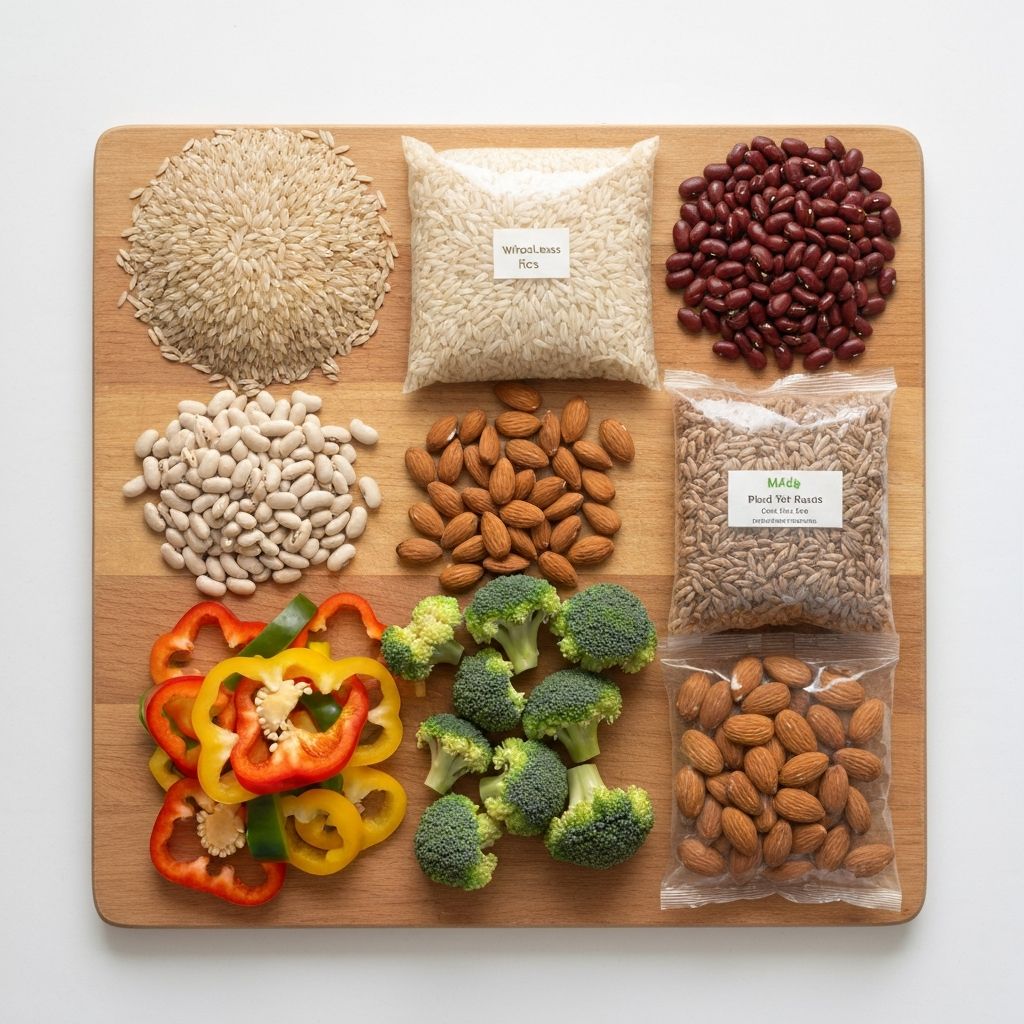
Whole plant foods retain original plant structure—vegetables, whole grains, legumes, fruits, nuts and seeds in relatively unmodified form. Processed plant foods undergo modification including refinement, milling, pureeing, extraction or recombination. Processing exists on a spectrum from minimal processing to substantial modification.
Structural Modifications Through Processing
Processing removes plant structure. Whole grains contain intact bran, germ and endosperm; refined grains retain primarily the endosperm, losing fibre and micronutrients concentrated in bran and germ. Whole legumes retain seed coat and cotyledon structure; milled legume flour loses structural components. Whole vegetables retain cell structure; puréed vegetables have disrupted cellular matrix.
Structural disruption influences nutrient bioavailability, gastric distension and eating dynamics.
Fibre and Water Loss in Processing
Processing often reduces fibre and water content relative to calories. Removing water concentrates energy; a dried fruit provides more calories per weight compared to fresh fruit. Milling removes fibre-containing structures; refined flour provides less fibre than whole grain flour. Juice extraction removes fibre entirely, providing sugars in liquid form consumed more rapidly than whole fruits.
Micronutrient Changes
Refining removes micronutrients concentrated in removed structures. Brown rice contains B vitamins, magnesium and manganese absent in white rice due to bran removal. Legume cooking water can leach water-soluble micronutrients; whole cooked legumes retain these nutrients in consumed portions. Processing generally reduces micronutrient density relative to calories.
Eating Rate and Oral Processing
Whole foods typically require more chewing and oral processing. A whole apple requires extended mastication; applesauce is consumed more rapidly. Whole grain bread requires more chewing than white bread. This mechanical difference extends meal duration. Slower eating allows satiation signals to develop during meals. Processing reduces chewing requirement, potentially increasing consumption rate.
Bioavailability and Absorption
Processing can enhance or reduce micronutrient bioavailability. Heating improves lycopene absorption from tomatoes; processing concentrates bioavailable forms. However, some processing methods reduce bioavailable micronutrient pools. Individual absorption varies based on concurrent food composition, digestive factors and individual physiology. Understanding processing effects on specific nutrients requires consideration of food-specific factors.
Role for Both Whole and Processed Foods
Plant-based diets can incorporate both whole and minimally processed plant foods. Both categories contribute to dietary diversity. Understanding distinctions allows informed choices aligned with individual circumstances. Some situations favour whole foods for satiation and micronutrient retention; other situations support processed foods for convenience or palatability.
Processed Plant-Based Alternatives
Plant-based meat and dairy alternatives represent highly processed plant foods. They may provide convenience and familiarity whilst differing nutritionally from whole plant sources. These products often contain added sodium, oils and additives. Understanding that processed alternatives differ from whole foods supports informed consumption choices. Both can feature in plant-based patterns; comparison with whole food counterparts clarifies nutritional trade-offs.
Individual Responses to Processing
Individual tolerance and preference for whole versus processed foods varies. Some individuals thrive with high proportions of whole foods; others find primarily processed approaches more sustainable. Digestive tolerance to fibre varies individually. Processing level represents a dietary variable with individual suitability—neither universally optimal approach exists.